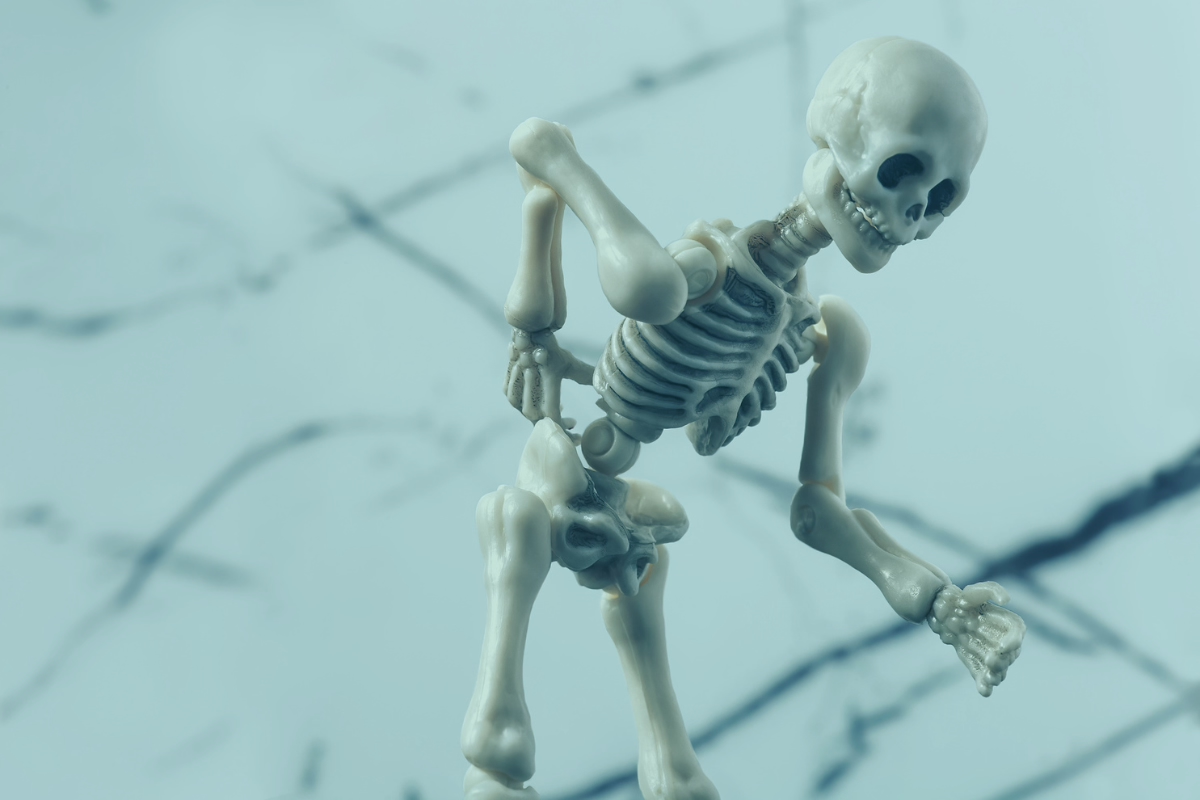
5 Scary Things People Believe About Back Pain
5 Scary Things People Believe About Back Pain (That Aren’t Actually True) 🎃
Back pain can be frightening, particularly when it appears suddenly or stops you doing something you would normally take for granted. When you don’t understand why it’s happening, it’s easy to imagine the worst – and unfortunately, some of the things we’ve traditionally been told about our backs can add to that worry.
You may have heard that pain means you’ve damaged your spine, that your back can easily go “out of alignment”, or that signs of degeneration on a scan mean it’s gradually wearing out. These ideas can sound convincing, especially when you’re already in pain, but our understanding of back pain has developed considerably over the years.
So, with Halloween approaching, we thought it was a good time to look at five of the scarier beliefs about back pain and explain why, in many cases, the reality is far less frightening.
1. “If my back hurts, I must have damaged something”
It’s easy to understand where this belief comes from. If you cut your finger, it hurts because you’ve damaged the skin. If you sprain your ankle, pain is one of the signs that the tissues have been injured. It seems logical, therefore, that if your back hurts, something in your spine must also have been damaged.
Back pain isn’t always quite so straightforward. Pain is a protective experience involving the nervous system, and although it can certainly accompany an injury, the amount of pain someone experiences doesn’t give us a direct measurement of how much tissue damage has occurred. Sleep, stress, previous experiences, general health and activity levels can all influence how sensitive we are to pain and how strongly we experience it.
This also helps explain why someone can develop back pain without remembering any injury at all. As we discussed in our recent article, Why Does My Back Hurt Even Though I Haven’t Injured It?, sometimes it’s more useful to look at changes in your routine, activity and overall health than to search for one movement that you think must have caused damage.
The important distinction is that pain is very real, but pain and damage aren’t interchangeable terms. If your back hurts, it deserves attention, particularly if the symptoms are persistent, worsening or unusual for you, but you don’t need to automatically picture a damaged or fragile spine.
2. “The worse the pain, the more serious the problem”
Anyone who has experienced a severe episode of back pain will know how alarming it can be. When it hurts to stand up, turn over in bed or even put your socks on, it’s natural to wonder whether something serious must have happened.
Pain intensity alone, however, doesn’t tell us how serious a back problem is. Some relatively uncomplicated episodes of back pain can be extremely painful, while certain conditions that do require medical attention may not initially produce the level of pain you might expect. This is why a proper assessment considers much more than simply asking someone to rate their pain from one to ten.
We want to know how and when the pain began, where you feel it, whether it travels, what makes it better or worse and whether you have any other symptoms. Your medical history, usual activity levels and any recent changes can also help build a much clearer picture of what may be happening.
There are symptoms that should always be taken seriously. New problems controlling your bladder or bowels, numbness around the genital or saddle area, significant or worsening weakness or numbness in both legs, or feeling seriously unwell alongside back pain require urgent medical attention. Significant trauma, unexplained weight loss or other concerning symptoms also warrant appropriate medical assessment.
So, while severe pain shouldn’t simply be ignored, try not to assume that the pain score itself tells you how much damage has occurred. What matters is the whole clinical picture.
3. “My back keeps going out of alignment”
People often describe a painful episode by saying their back has “gone out”. Perhaps they stood up and suddenly felt crooked, noticed a sharp catch in one direction or found that one side of their back felt much tighter than the other. When your body suddenly doesn’t move or feel the way it normally does, the sensation that something has shifted can be very convincing.
However, your spine isn’t routinely slipping in and out of its normal anatomical position. The vertebrae are supported by joints, discs, ligaments, muscles and other tissues that together create a remarkably strong structure. A vertebra genuinely moving significantly out of its normal position would be very different from the everyday stiffness and back pain that most people mean when they say their back is “out”.
What can happen is that pain changes the way we move. Muscles can tighten, movement can become guarded and you may unconsciously shift your weight or hold yourself differently because one position feels more comfortable than another. That can leave you feeling uneven, twisted or unable to straighten properly without meaning that a bone has simply popped out of place.
This distinction matters because we don’t want people to think of their spine as something so fragile that everyday movement can knock it out of position. At Avalon Chiropractic, our focus is on how your body is moving and functioning, where there may be stiffness or restriction and what can help you regain comfortable, confident movement.
4. “My scan shows degeneration, so my back is wearing out”
Few words on a scan report sound quite as worrying as “degeneration”. Add terms such as “disc bulge” or “degenerative changes” and it’s very easy to picture a spine that is damaged and destined to deteriorate further.
Research gives us a much more reassuring perspective. A large systematic review looking at scans from more than 3,000 people without back pain found that many of the changes commonly labelled degenerative become increasingly common as we get older. Disc degeneration, for example, was found in around 37% of pain-free 20-year-olds and 96% of pain-free 80-year-olds. Disc bulges and other changes were also frequently seen in people who had no symptoms at all.
That doesn’t mean scan findings are irrelevant, nor does it mean imaging isn’t sometimes important. It means the results have to be interpreted in context. A finding on an MRI doesn’t automatically tell us what is causing someone’s pain, which is one reason NICE advises that imaging isn’t routinely needed for uncomplicated low back pain unless the result is likely to change how the condition is managed.
It can be helpful to think of some of these findings as signs that your spine has lived and adapted rather than automatically viewing every change as damage. Just as the outside of our bodies changes as we get older, the structures we can see on the inside change too.
If you have previously been told that you have “wear and tear”, therefore, don’t assume that a scan has written the story of what happens next. It’s one piece of information that needs to be considered alongside your symptoms, physical examination, general health and what you’re actually able to do.
5. “Once you’ve got a bad back, you’ll always have a bad back”
This is perhaps one of the most unhelpful beliefs because it can change not only how someone thinks about their back, but how they use it. After a painful episode, it’s understandable to become cautious. You may stop lifting things, avoid the gym, give up gardening or become nervous about bending because you don’t want the pain to return.
Back pain can recur, and no responsible health professional can promise that someone who has experienced it once will never experience it again. What we can say is that an episode of back pain doesn’t automatically mean your spine has become permanently weak or that you need to protect it for the rest of your life.
In fact, current NICE guidance encourages people with low back pain to continue normal activities where possible, with exercise and self-management forming important parts of care. Movement can be adapted when something is particularly uncomfortable, but the longer-term goal is generally to restore confidence and function rather than becoming increasingly afraid of using your back.
We talk about this frequently in our articles because modern life can make regular movement surprisingly difficult. In What Sitting Does to Your Metabolism, we looked at the importance of breaking up prolonged sitting rather than treating sitting itself as something harmful. Our article on Walking for Stress Relief also explores how something as simple as regular walking can help introduce more movement into the day, particularly when stress and long periods of sitting have left the body feeling tense or stiff.
The words we use about ourselves matter too. There is a big difference between saying “I’ve had problems with my back before” and deciding that you simply have a “bad back”. One describes something you’ve experienced; the other can begin to feel like a permanent label.
Your back is probably stronger than you think
If there’s one message we’d like you to take from these five myths, it’s that the spine is not a delicate structure that needs to be protected from normal life. It is strong, adaptable and designed to move. Back pain can certainly be disruptive and, at times, extremely painful, but frightening explanations don’t necessarily help us understand it any better.
That doesn’t mean ignoring pain or trying to push through symptoms regardless. It means responding to pain appropriately without immediately assuming the worst. Sometimes that may involve temporarily modifying an activity, gradually increasing movement again, improving strength or looking at how much time you’re spending in one position. Our article Is Poor Posture Draining Your Energy Levels? explores this idea further, particularly why regularly changing position can be more realistic than trying to hold one supposedly perfect posture throughout the day.
At Avalon Chiropractic in Belfast, we believe that understanding what is happening is an important part of feeling confident about your body again. When someone comes to us with back pain, we look at the history of the problem, how it is affecting everyday life and how the body is moving and functioning. If chiropractic care is appropriate, we’ll explain what we’ve found and discuss the options available. If something in your history or examination suggests that you need further medical assessment or investigation, we’ll explain that too.
There are plenty of things worth being frightened of at Halloween. Your back doesn’t necessarily need to be one of them. 🎃
References and further reading
NICE – Low back pain and sciatica in over 16s: assessment and management