Can Your Posture Affect Your Mood?
When most people think about posture, they usually think about back pain, neck tension, or sitting up straighter at a desk. What often gets overlooked is how posture may also influence the way we feel emotionally throughout the day.
The connection between the body and mind is closer than many people realise. The way we sit, stand, and move can affect breathing, muscle tension, stress levels, and even how alert or confident we feel. While posture is not the sole cause of low mood or stress, it can absolutely play a role in how comfortable, energised, and balanced the body feels overall.
Modern lifestyles make this particularly relevant. Many people now spend hours each day sitting, looking down at screens, driving, or working in static positions. Over time, these habits can begin to affect not only physical comfort, but general wellbeing too.
The Body and Mind Are Closely Connected
Posture is often a reflection of how the body is functioning at a particular moment.
When people feel stressed, overwhelmed, or tired, they often naturally begin to round their shoulders, lower their head, and reduce movement. The opposite can also be true. Staying in tense or collapsed positions for long periods may influence how the body responds physically and mentally throughout the day.
This does not mean posture directly “causes” low mood. However, it does highlight how physical tension and emotional wellbeing can influence one another.
Research published by the British Psychological Society has explored how posture may affect emotional processing, confidence, and stress responses. While the relationship is complex, the findings support the idea that body position can influence how people experience certain emotions and thoughts.
How Slouching Can Affect Breathing
One of the most important links between posture and mood is breathing.
When posture begins to collapse—particularly during long periods of sitting—the chest often becomes more restricted and the upper back rounds forward. This can reduce how freely the ribs and diaphragm move during breathing.
As a result, breathing may become shallower and more rapid without people fully noticing it.
This matters because shallow breathing is commonly associated with stress and tension. When the body remains in that state for hours at a time, people may begin to feel more mentally fatigued, irritable, or overwhelmed.
By contrast, more upright and relaxed movement often allows breathing to feel easier and more natural. This is one reason people frequently report feeling mentally clearer after standing up, stretching, or going for a walk.
In our recent article on Walking for Stress Relief, we discussed how regular movement can help both the body and mind settle during stressful periods. The same principle applies to posture. Movement changes how the body feels, and that can influence overall wellbeing.
Physical Tension Can Be Mentally Draining
Posture-related tension does not just stay physical.
When the neck, shoulders, and upper back remain tight all day, it often creates a background level of discomfort that the body is constantly responding to. Even when the tension is mild, it can still become mentally tiring over time.
Many people notice this after long hours at a desk or using phones and laptops. They may feel:
- mentally exhausted
- unable to fully relax
- more irritable than usual
- physically heavy or stiff by the evening
Often, they assume this feeling is purely stress or tiredness, without recognising how much physical strain may also be contributing.
As we explained in our article Is Poor Posture Draining Your Energy, poor posture can place extra demands on muscles and joints throughout the day. That constant effort may gradually leave the body feeling fatigued and tense, even without intense physical activity.
Posture, Confidence, and Body Language
Posture also influences how people carry themselves socially and emotionally. This idea has also been discussed widely outside of healthcare settings. Motivational speaker Tony Robbins often talks about the connection between “physiology” and emotional state, highlighting how body position, breathing, and movement can influence confidence, focus, and stress levels. While this should not be viewed as a substitute for medical or mental health support, it reflects a growing awareness that the way we carry ourselves physically may affect how we feel mentally too.
When someone feels confident, they often move more openly and freely. When they feel stressed or low in energy, posture tends to become more closed off and restricted. This is something most people recognise instinctively.
Again, posture alone does not determine mood or confidence, but body position can influence how people physically experience certain situations.
This is one reason many workplace wellbeing programmes now encourage regular movement, standing breaks, and better desk setups—not simply to reduce pain, but to support concentration, comfort, and overall wellbeing during long working days.
Why Movement Matters More Than “Perfect” Posture
One of the biggest misconceptions around posture is the idea that there is one “perfect” position that people should hold all day.
In reality, the body responds far better to regular movement than remaining completely still, even in a technically good posture.
Changing position regularly, standing up more often, walking during breaks, and reducing long periods of sitting can all help reduce physical tension and stiffness. These small changes often have a noticeable effect on how people feel both physically and mentally.
The aim is not to sit rigidly upright all day long. It is to keep the body moving and avoid prolonged strain building up over time.
A Chiropractic Perspective
From a chiropractic perspective, posture is closely linked to mobility, spinal movement, and overall function.
When joints become stiff or restricted—particularly through the neck, upper back, and shoulders—the body often compensates by placing extra strain elsewhere. Over time, this may contribute to ongoing tension, discomfort, and reduced ease of movement throughout the day.
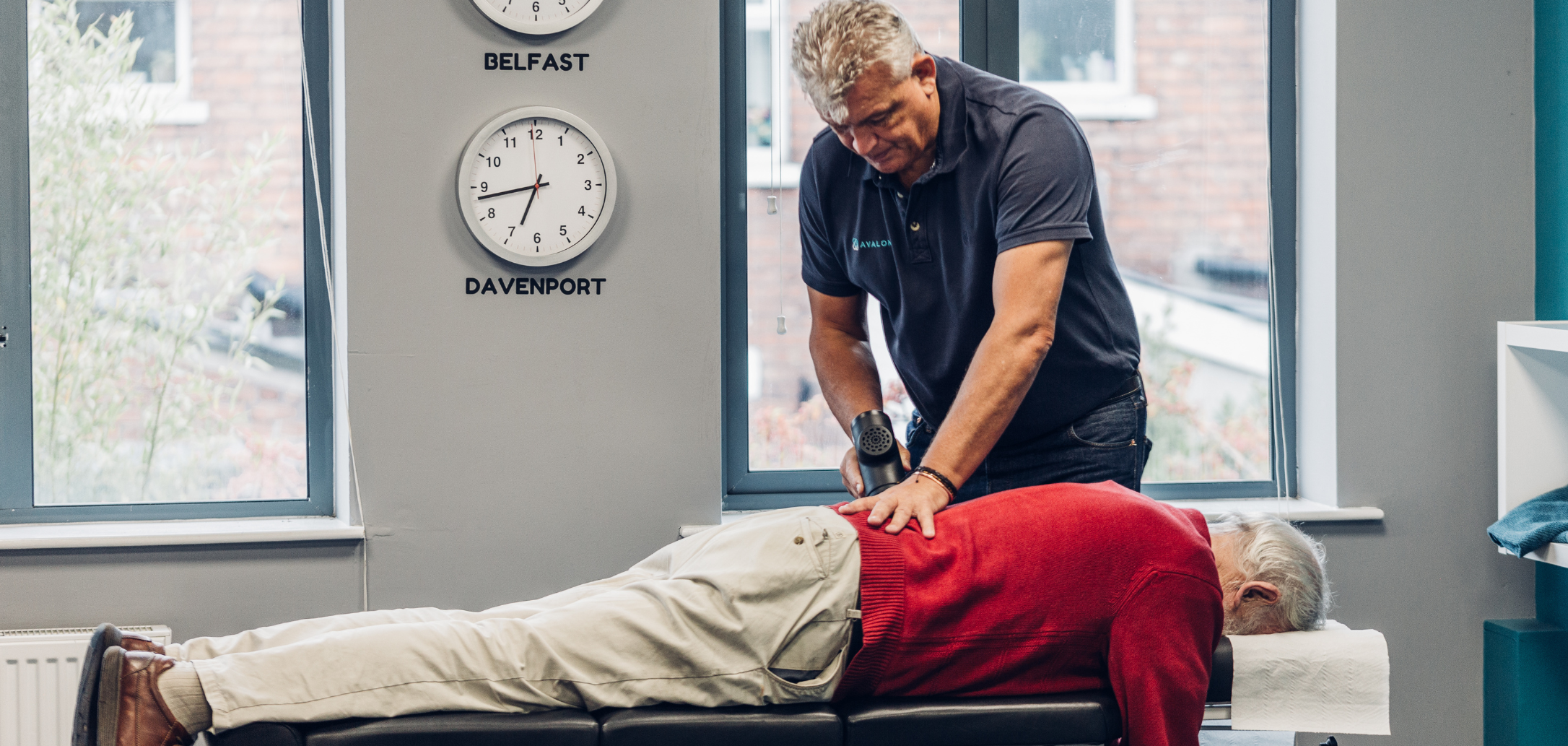
At Avalon Chiropractic Belfast, we look at more than just symptoms alone. During an initial consultation, we assess posture, spinal movement, mobility, and lifestyle habits that may be contributing to tension or physical stress. This may also include spinal scans and postural assessments to help build a clearer understanding of how the body is functioning overall.
Improving movement and reducing physical strain can often help people feel more comfortable, more relaxed, and better able to stay active in daily life.
Looking Beyond Back Pain
Posture affects far more than appearance.
The positions we spend time in every day can influence breathing, muscular tension, movement, energy levels, and overall comfort. Over time, these physical changes may also affect how we feel mentally, particularly during periods of prolonged sitting, stress, or inactivity.
Small, realistic changes—moving more regularly, improving workspace habits, and addressing areas of stiffness or restriction—can often make a meaningful difference over time.
If you have been feeling unusually tense, stiff, or physically drained throughout the day, it may be worth considering not only how much stress you are under, but also how your body is functioning and moving overall. Make an appointment with us here at Avalon Chiropractic in Belfast to see how we can help.