5 Tips To Avoid Back Pain On Long Flights
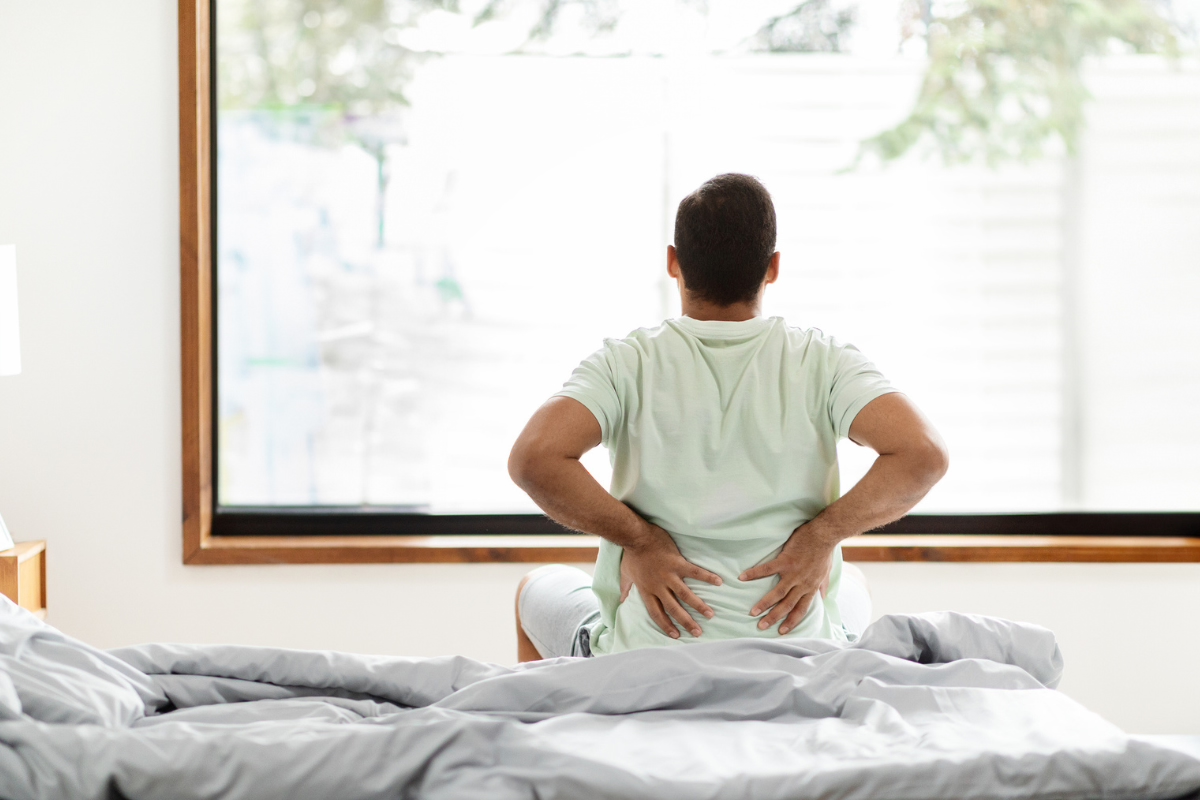
Long flights are often the start of an exciting holiday, but for many people they can also be the start of stiffness, tension, and back pain.
After months of planning and looking forward to a trip, the last thing anyone wants is to arrive feeling uncomfortable before the holiday has even begun. Yet spending several hours sitting in a confined space can place unexpected strain on the neck, shoulders, lower back, and hips.
The good news is that a few simple habits can make a noticeable difference to how comfortable you feel both during the flight and after you land.
Here are five practical ways to help reduce the risk of back pain on long flights.
1. Avoid Staying In One Position For Too Long
One of the biggest contributors to stiffness during flying is simply remaining still for extended periods.
When we sit for hours at a time, joints move less, muscles become tighter, and circulation slows down. The spine and hips in particular can begin feeling stiff when they are held in the same position for prolonged periods.
If possible, try to stand up and walk up and down the aisle every hour or two. Even a short walk to stretch your legs can help keep the body moving.
Simple movements while seated can also help. Gentle ankle circles, shoulder rolls, and changing position regularly can all help reduce the feeling of stiffness that often builds during a flight.
2. Support Your Lower Back
Most airline seats are designed to accommodate a wide variety of passengers, which means they are not always ideal for supporting the natural curves of your spine.
Many people find that their lower back begins feeling strained after several hours because the seat does not fully support the lumbar curve.
A small travel cushion, rolled-up jumper, or lumbar support can help maintain a more comfortable sitting position. Supporting the lower back often reduces the tendency to slump forward, which can place additional strain on both the lower and upper back over time.
3. Be Careful How You Sleep
Sleeping on a flight may help pass the time, but awkward sleeping positions are a common cause of neck and upper back discomfort.
Falling asleep with your head tilted forward or to one side for long periods can leave muscles feeling tight and sore after landing.
A supportive travel pillow can help keep the head in a more neutral position and reduce strain on the neck while sleeping. If you do plan to sleep during the flight, spending a little time getting comfortable beforehand can make a significant difference to how you feel later.
4. Stay Hydrated
Travelling often involves early starts, busy airports, and long periods sitting down, making it easy to forget about hydration.
Aircraft cabins typically have low humidity levels, and many people drink less water than usual while travelling. While hydration is important for general health, it can also play a role in helping the body feel and function at its best during long journeys.
Try to drink water regularly throughout the flight and avoid relying solely on coffee, alcohol, or sugary drinks.
5. Move As Soon As You Land
Many people spend hours sitting on a flight, only to sit again in airport transfers, taxis, or hotel transport immediately afterwards.
Once you arrive at your destination, try to get moving as soon as reasonably possible. A short walk, gentle stretching, or simply moving around your accommodation can help reduce some of the stiffness that naturally develops after a long period of sitting.
This becomes particularly important on longer flights where the body may have been restricted to a seated position for many hours.
As we discussed in our article on Walking for Stress Relief, regular movement plays an important role in helping the body feel and function better overall. The same principle applies after travelling.
Why Some People Struggle More Than Others
While long flights can leave almost anyone feeling stiff, people who already have underlying back tension, recurring neck pain, or ongoing mobility restrictions often notice symptoms more quickly.
A small issue that is manageable during everyday life can sometimes become more noticeable after several hours sitting in one position.
This is one reason many people find themselves searching for help shortly before a holiday or immediately after returning home.
A Chiropractic Perspective
From a chiropractic perspective, maintaining mobility throughout the spine, hips, and surrounding joints plays an important role in how comfortably the body moves and responds to the demands of travel.
When movement becomes restricted or certain areas are already under strain, long periods of sitting can often magnify those issues.
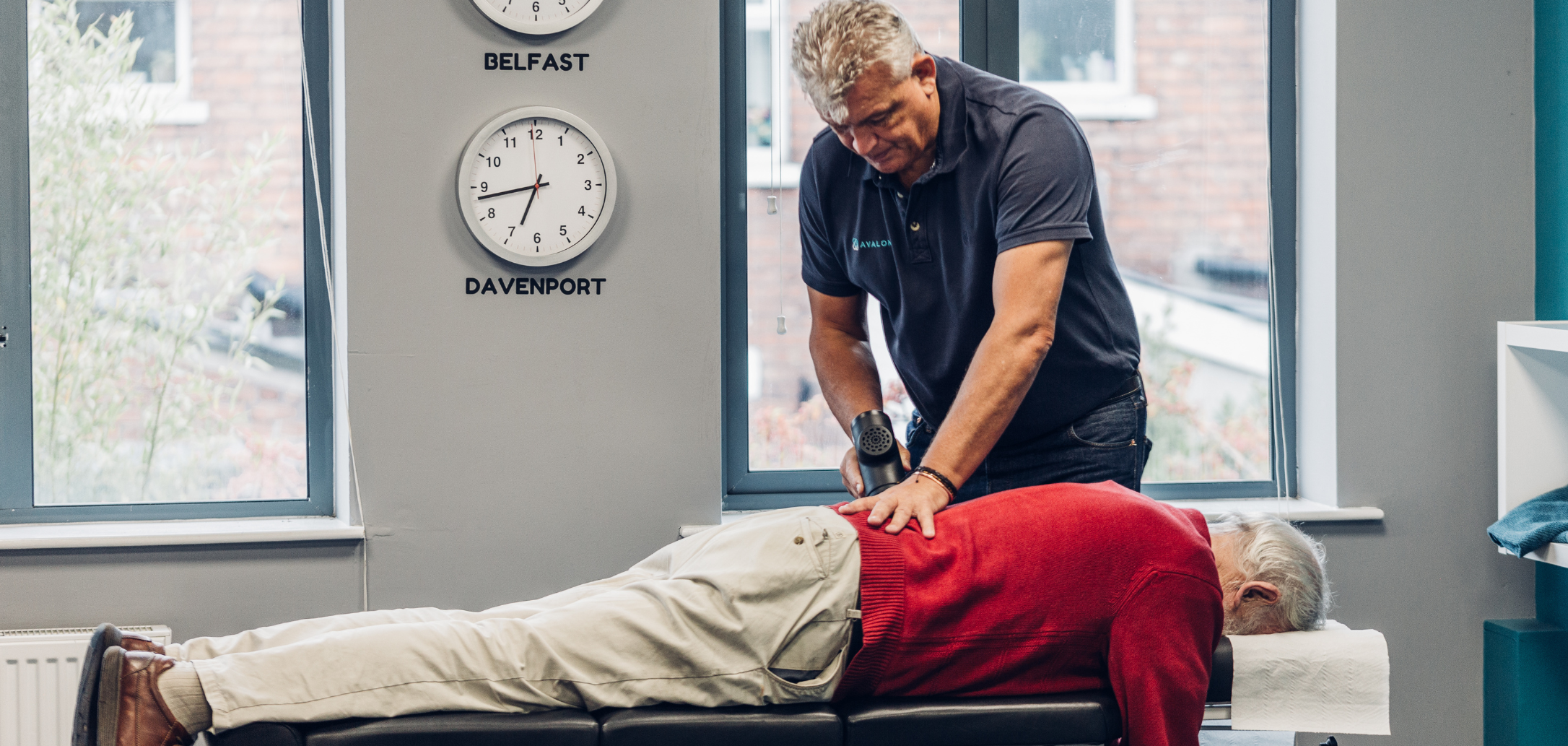
At Avalon Chiropractic Belfast, assessments may include posture analysis, spinal scans, mobility testing, and movement assessment to help identify areas that may be contributing to ongoing stiffness or discomfort.
Many of our regular patients choose to book an adjustment before their holidays to help ensure they are moving as freely and comfortably as possible before the inevitable extra strains that holiday luggage, different mattresses / pillows and long flights might have. Likewise, if you have an ongoing niggle that never quite seems to go away, or simply want peace of mind before your holiday, arrange a consultation with your own chiropractic team or with us here at Avalon.
Arrive Ready To Enjoy Your Holiday
Long flights do not have to mean arriving stiff, sore, or uncomfortable.
A little preparation, regular movement, good support, and attention to posture can all help reduce the strain that flying places on the body.
If you are preparing for a holiday and would like your spine, posture, or mobility assessed before you travel, or if you have an ongoing back issue that you would like checked before your trip, the team at Avalon Chiropractic Belfast would be happy to help.
After all, holidays are for making memories—not spending the first few days recovering from the journey.
Published by the team at Avalon Chiropractic in Belfast on 14th July 2026.