Your Summer Health Check: Five Questions to Ask
Back in January, we encouraged our readers to think differently about their health.
Rather than chasing ambitious New Year’s resolutions that often disappear before February, we suggested focusing on small, sustainable habits instead. In articles such as Kinder Habits That Aren’t Resolutions, Small Daily Actions to Improve Your Well-Being and The Simple Power of Getting Outside, we explored how simple lifestyle choices—moving a little more, getting enough sleep, drinking more water and spending time outdoors—can have a surprisingly positive effect on your overall wellbeing.
Those ideas are just as relevant today.
The difference is that, instead of asking “What changes should I make?”, summer is a good time to ask “How am I actually doing?”
Summer naturally changes our routines. We might spend more time outside, go away on holiday, tackle jobs in the garden, enjoy longer walks or simply slow down enough to notice how we’re feeling.
Sometimes that’s when we realise things have changed. Perhaps you’ve noticed your back aches after gardening, maybe you’re more tired than you expected, perhaps you slept brilliantly while you were away, only to struggle again once you got home.
Rather than ignoring these changes, think of them as useful information. Your body is remarkably good at adapting—but it’s also very good at telling you when something deserves a little more attention. So before another few months disappear, why not carry out your own Summer Health Check?
1. Are You Moving As Much As You Think You Are?
When people think about exercise, they often imagine joining a gym, going for a run or taking part in organised sport. In reality, your body doesn’t care whether movement comes from a workout or everyday life—it simply benefits from moving regularly.
- Walking the dog.
- Taking the stairs.
- Working in the garden.
- Playing with your children or grandchildren.
- Parking a little further away from the supermarket.
All of these contribute towards a healthier, more active lifestyle.
The NHS recommends adults aim for at least 150 minutes of moderate physical activity each week, together with activities that help maintain strength and balance. The challenge for many people isn’t fitting in exercise—it’s breaking up the long periods of sitting that have become part of modern life.
If you’ve read our article Walking for Stress Relief, you’ll know we’re big believers in simple, consistent movement. Walking doesn’t just support cardiovascular health; it also helps reduce stiffness, encourages healthy posture, eases muscle tension and gives the mind a chance to slow down.
Likewise, in The Simple Power of Getting Outside, we explored how spending time outdoors often encourages natural movement without us even thinking about it. A stroll around the park, an afternoon in the garden or a walk along the coast all help keep the body mobile while also benefiting our mental wellbeing.
Ironically, summer is also when people often discover how little they’ve been moving during the rest of the year.
After a day gardening, a long walk on holiday or playing games on the beach with the family, it’s common to wake up feeling surprisingly stiff.
As we discussed in Why You Feel Stiff After Being More Active, this doesn’t necessarily mean you’ve injured yourself. More often, it’s your body’s way of adapting to doing more than it’s been used to. The important thing is not to let that stiffness put you off staying active altogether.
Instead, ask yourself:
- Am I moving regularly throughout the day?
- Have I gradually become more sedentary over the past few months?
- Do I feel stiff after sitting for long periods?
- Could I build a little more movement into my daily routine?
You don’t need to train for a marathon. Often, the healthiest changes are the simplest ones—and they’re the ones you’re most likely to keep doing.
2. Is Your Energy Where You’d Like It To Be?
Feeling tired after a busy week is perfectly normal, feeling tired all the time isn’t something you should simply accept. Many people assume low energy is just part of getting older, but our energy levels are influenced by many different factors.
- Sleep.
- Nutrition.
- Hydration.
- Movement.
- Stress.
- General health.
All of these play an important role in how energetic we feel from one day to the next.
If you’ve recently found yourself relying on extra cups of coffee to get through the afternoon, struggling to get going in the morning or feeling as though you never quite recharge, it’s worth asking why.
Back in Small Daily Actions to Improve Your Well-Being, we talked about how simple habits such as drinking enough water, moving regularly, sleeping well and managing stress create the foundation for better health. None of those habits are particularly exciting on their own—but together they have a powerful effect on how your body functions.
This is also where another important topic begins to emerge: metabolism.
Many people hear the word metabolism and immediately think about weight loss.
In reality, metabolism is about much more than burning calories. It describes the countless processes your body uses to convert food into energy, repair tissues, regulate hormones and keep every cell functioning properly.
It’s a fascinating subject—and one we’ll explore in more detail in another article—because understanding your metabolism helps explain why two people with similar lifestyles can sometimes feel completely different.
For now, simply ask yourself:
- Do I wake feeling refreshed?
- Am I as energetic as I was six months ago?
- Do I feel alert throughout the day?
- Or has tiredness quietly become my normal?
If your answer is the latter, don’t ignore it.
Your body may simply be encouraging you to look a little more closely at the habits that support your health every day.
3. How Much of Your Day Do You Spend Sitting?
If you answered the first question by thinking, “I go to the gym a couple of times a week, so I’m probably active enough,” there’s another question worth asking.
How much of the rest of your day do you spend sitting?
Many of us now spend hours at a desk, in the car or relaxing in front of the television. Even people who exercise regularly can spend most of the day being sedentary without realising it.
Prolonged sitting doesn’t just affect your posture. It can contribute to muscle tightness, reduced joint mobility, back and neck discomfort, poorer circulation and lower energy levels. Over time, it may also affect the way your body uses energy.
That’s one of the reasons we’re seeing increasing interest in how modern lifestyles influence our health. It’s not just about whether we exercise—it’s about what we do during the other 23 hours of the day.
If you regularly find yourself sitting for long periods, try asking yourself:
- Do I get up and move every 30–60 minutes?
- Could I walk while taking a phone call?
- Could I stand to work for part of the day?
- Do I drive short distances that I could comfortably walk?
These aren’t dramatic lifestyle changes, but they’re exactly the kind of small improvements we’ve encouraged throughout our health articles.
We’ll also be looking more closely at the relationship between prolonged sitting and metabolism in another article, as it’s an area that’s becoming increasingly important as our working lives continue to change.
4. How Well Are You Coping With Stress?
Stress is part of life, none of us can avoid it completely. The important question isn’t whether you’re experiencing stress—it’s whether your body has enough opportunity to recover from it.
Sometimes stress is obvious, sometimes it isn’t. It can show itself in ways people don’t immediately associate with being stressed:
- Tight shoulders and neck muscles.
- More frequent headaches.
- Difficulty concentrating.
- Feeling irritable or overwhelmed.
- Poor sleep.
- Feeling tired despite getting enough rest.
As chiropractors, we often see patients whose muscles have been held under tension for weeks or months without them even realising it. The body adapts remarkably well, but it isn’t designed to stay in a constant state of “high alert”.
This doesn’t mean stress is the sole cause of aches and pains, but it can certainly influence how your body feels, how well you recover and how easily muscles relax.
If you’ve read our article Walking for Stress Relief, you’ll know that managing stress doesn’t always require complicated techniques. Sometimes a regular walk, time outdoors or building small moments of recovery into your day can make a meaningful difference.
We’ll also be exploring cortisol this month—the hormone most commonly associated with the body’s stress response—in more detail. It’s received a great deal of attention recently, but as with many health topics, there’s a lot of misinformation. Understanding what cortisol actually does can help us make better decisions about our health without believing every headline we read online.
Ask yourself:
- Am I sleeping well?
- Do I feel relaxed during the day?
- Have I been carrying tension in my shoulders or neck?
- Do I give myself enough time to recover?
5. What Have You Been Ignoring?
Perhaps the most important question of all is also the simplest.
What have you been putting up with?
Many people become experts at adapting.
“I’ve always had a stiff neck.”
“My back only hurts after gardening.”
“My shoulder settles down after a few days.”
“I’ll get it looked at when I have time.”
Sometimes these symptoms are short-lived and settle on their own, sometimes they don’t. One of the most common things we hear in practice is: “I wish I’d come sooner.” Small problems don’t always stay small.
Reduced mobility can gradually limit the activities you enjoy. A minor ache can slowly alter the way you move. Muscle tension can become something you simply accept as “normal.” Your body is incredibly resilient, but it also benefits from being listened to. Seeking advice doesn’t mean there’s something seriously wrong. Often, it simply provides reassurance, a better understanding of what’s happening and practical advice to help you move more comfortably and confidently.
Whether that’s improving posture, increasing mobility, strengthening certain muscles or simply making a few lifestyle changes, early action is usually much easier than waiting until a small issue becomes a bigger one.
Your Summer Health Check
If you’ve worked through these five questions and answered “yes” to one or two of them, don’t see that as a failure, see it as valuable information.
Health isn’t something we either have or don’t have, it’s something we look after. Sometimes that means getting outside more, sometimes it means moving a little more each day. Sometimes it means improving our sleep or finding healthier ways to manage stress, and sometimes it simply means recognising that we’ve been ignoring something our body has been trying to tell us.
Over the coming weeks, we’ll continue exploring some of these topics in greater depth, including metabolism, the effects of prolonged sitting, cortisol and modern approaches to weight management. The more we understand how our bodies work, the better equipped we are to make informed decisions about our health.
After all, good health isn’t built on one New Year’s resolution, it’s built on hundreds of small decisions, repeated consistently over time.
Ready to Take the Next Step?
If your Summer Health Check has highlighted persistent aches, reduced mobility, poor sleep, ongoing fatigue or recurring tension, it may be time to seek professional advice rather than simply hoping things improve on their own.
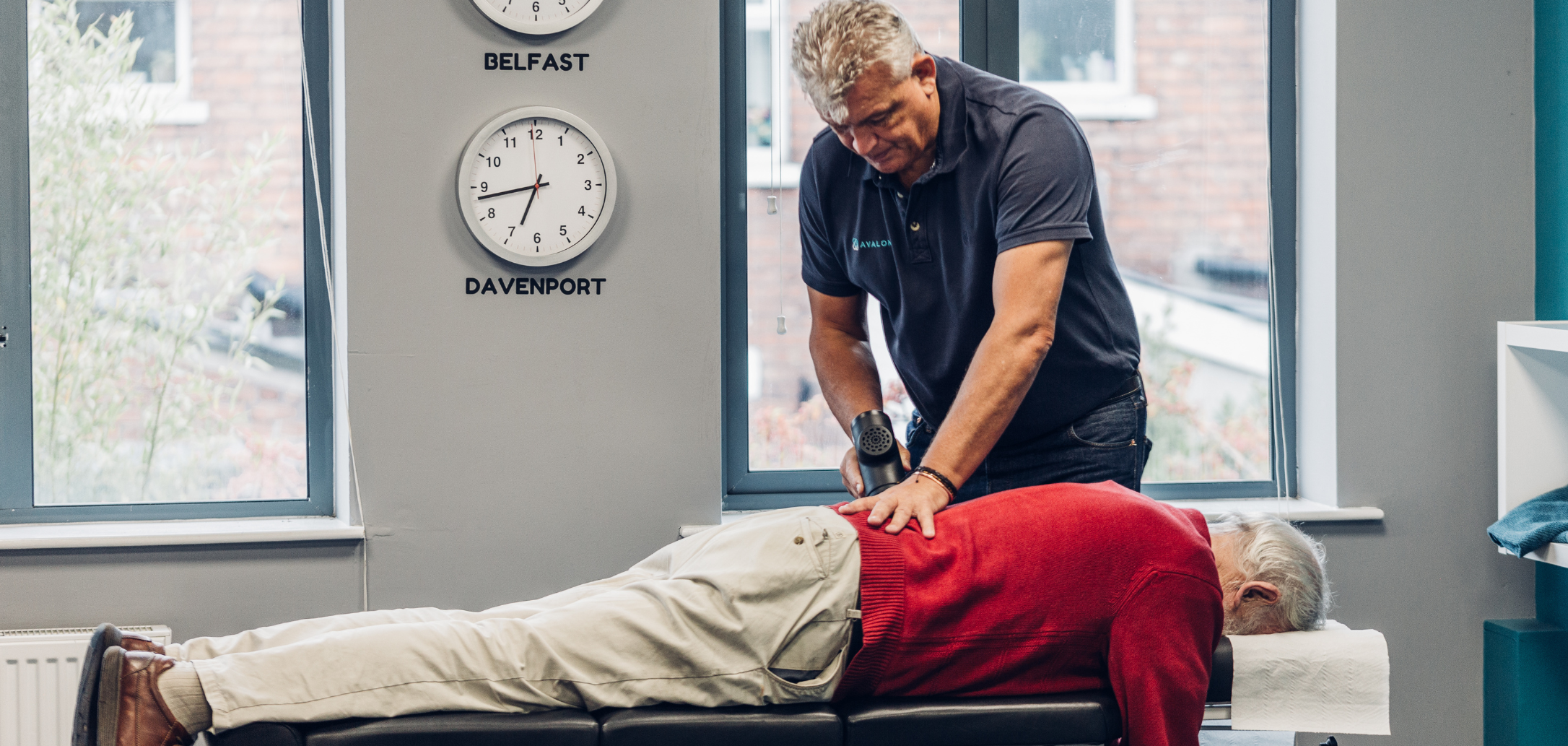
At Avalon Chiropractic Clinic, we work with people from across Belfast and the surrounding area to help them understand what’s contributing to their symptoms and support them in improving their movement, comfort and overall wellbeing. Every person is different, which is why we take the time to assess your individual circumstances before recommending the most appropriate course of care.
If you’re local, we’d be delighted to welcome you to the clinic. If you’re reading this from elsewhere in the UK or overseas, we’d encourage you to find a local chiropractic clinic who can assess your individual needs and help you decide on the best approach. Whatever you decide, don’t ignore what your body is telling you.
Sometimes the most important step towards feeling better isn’t making a dramatic change—it’s simply taking the time to listen.