What Causes Knee Pain Without Injury?
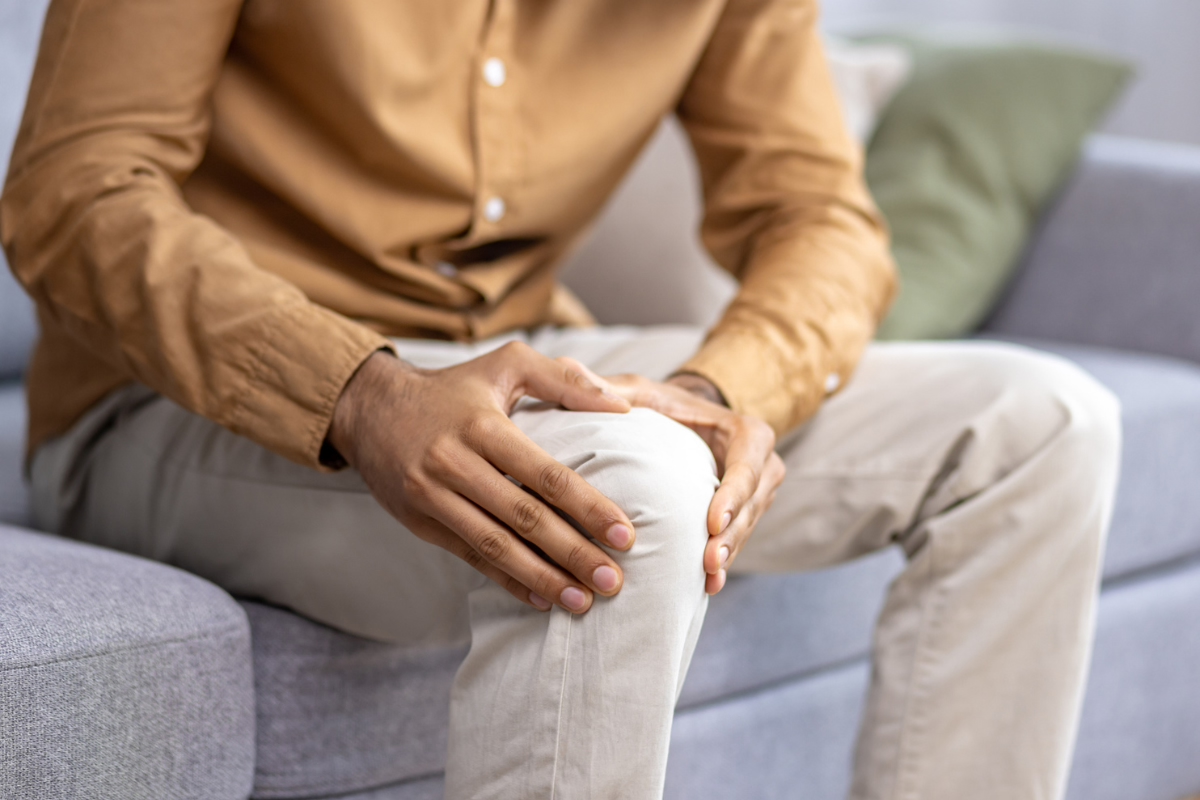
Not all knee pain begins with a sudden injury.
For many people, knee discomfort develops gradually over time without a specific accident or obvious cause. At first, it may simply feel stiff getting up after sitting, uncomfortable walking downstairs, or slightly sore during longer walks. Over time, however, everyday movement can begin feeling less comfortable than it used to.
Because this type of knee pain often builds slowly, many people simply adapt around it without fully realising how much their movement patterns have changed.
What many people do not realise is that knee pain is not always caused by a problem within the knee itself. In many cases, the way the rest of the body moves can play a significant role too.
The Knee Does Not Work In Isolation
The knee sits between the hips and ankles, meaning it is heavily influenced by how the surrounding joints and muscles move during everyday activity.
Walking, climbing stairs, standing up, exercising, and balance all rely on multiple areas of the body working together smoothly. When movement becomes restricted elsewhere, extra strain can gradually begin transferring through the knees.
This is one reason some people experience knee pain even when scans or imaging do not show a major injury.
For example:
- reduced hip mobility may alter walking mechanics
- ankle stiffness can change how force moves through the knee
- muscular tightness may affect balance and movement patterns
- posture and pelvic alignment may influence how weight is distributed through the legs
Over time, these small compensations can begin placing extra stress through the knees during normal daily movement.
How The Hips Can Influence Knee Pain
One area that commonly affects the knees is the hips.
The hips play a major role in controlling movement and balance during walking. When hip movement becomes restricted or the pelvis is not moving evenly, the knees often compensate in order to keep the body moving smoothly.
This is something we recently discussed in our article Does Your Hip Pain Make Walking Difficult?, where we explored how hip mobility influences walking mechanics and overall movement patterns.
In many cases, people focus entirely on the knee itself without realising the hips may also be contributing to the problem.
This is also why Keith often explains how hip alignment and surrounding areas can often unbalance a knee causing pain which can feel unexplained to the person affected.
Why Knee Pain Often Feels Worse After Sitting
One of the most common complaints people describe is stiffness or discomfort after sitting for a while.
Modern lifestyles often involve long hours sitting at desks, driving, or remaining in similar positions throughout the day. Over time, reduced movement variety can contribute to stiffness through the knees, hips, and surrounding muscles.
Many people notice:
- stiffness standing up
- discomfort using stairs
- knees feeling tight after driving
- soreness after inactivity
- reduced confidence during movement
Usually, movement begins feeling slightly easier once the body warms up again, which is why many people initially dismiss the issue as “just stiffness.”
Movement Variety Matters More Than Many People Realise
The body generally responds best to regular movement.
When joints and muscles repeatedly move through healthy ranges of motion, they tend to remain more mobile and adaptable. However, modern lifestyles often keep the body moving within a fairly limited range of motion for large parts of the day.
Over time, this may contribute to:
- reduced mobility
- muscular tightness
- altered walking mechanics
- stiffness through the hips, knees, and lower back
In our recent article Can Yoga Help Improve Spinal Mobility?, we discussed how movement variety helps the body maintain flexibility and mobility over time. The same principle applies to the knees and surrounding joints.
Why Proper Assessment Matters
Because knee pain can sometimes be influenced by multiple areas of the body, proper assessment becomes important.
Focusing only on the painful area may overlook movement restrictions or compensation patterns elsewhere that are contributing to ongoing strain.
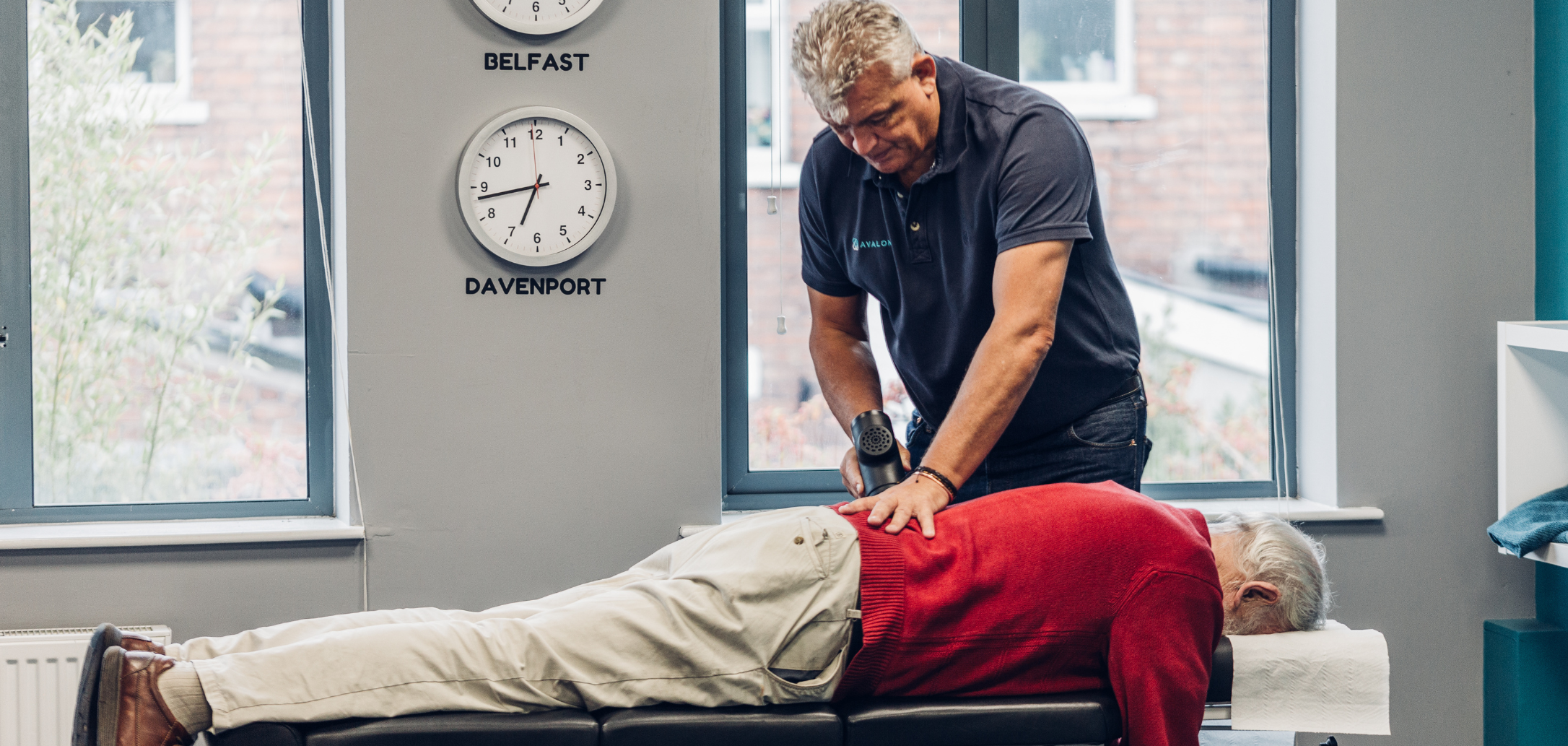
At Avalon Chiropractic Belfast, assessments may include:
- posture analysis
- spinal scans
- gait assessment
- hip and pelvic mobility testing
- movement analysis
- examination of surrounding joints and muscles
The goal is to better understand how the body is moving overall and whether certain movement patterns may be placing unnecessary stress through the knees.
Signs It May Be Worth Getting Your Knee Assessed
Occasional soreness after activity is common. However, some signs suggest it may be worth getting things properly assessed.
These include:
- knee pain lasting several weeks or longer
- discomfort during walking or stairs
- stiffness after sitting
- recurring flare-ups
- limping or favouring one side
- hip stiffness alongside knee discomfort
- reduced confidence during movement
Many people wait until movement becomes heavily restricted before seeking help, but addressing movement restrictions earlier is often easier than waiting until the problem begins affecting everyday life more significantly.
Looking At The Bigger Picture
Knee pain without injury can often feel frustrating because the cause is not always obvious.
However, the body works as a connected system, and movement restrictions elsewhere can sometimes contribute more to knee discomfort than people realise. Looking at posture, hip movement, walking mechanics, spinal mobility, and overall movement patterns often provides a clearer understanding of why certain areas are becoming overloaded.
Improving mobility and movement quality throughout the body can help support more comfortable movement and reduce unnecessary strain over time.
If you would like to learn more about knee pain and how chiropractic care may help support mobility and movement, visit our dedicated knee pain page here: