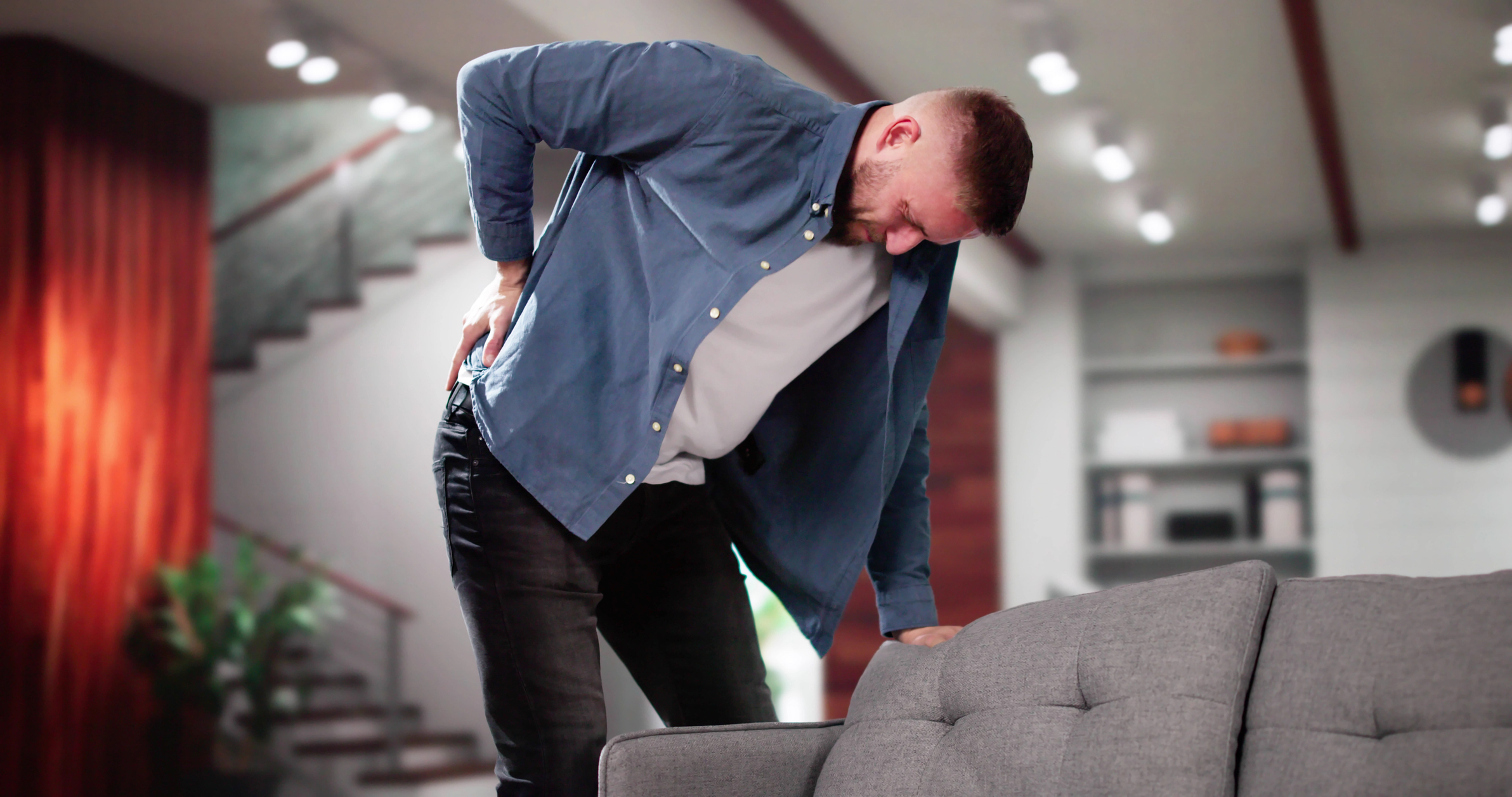
Does Your Hip Pain Make Walking Difficult?
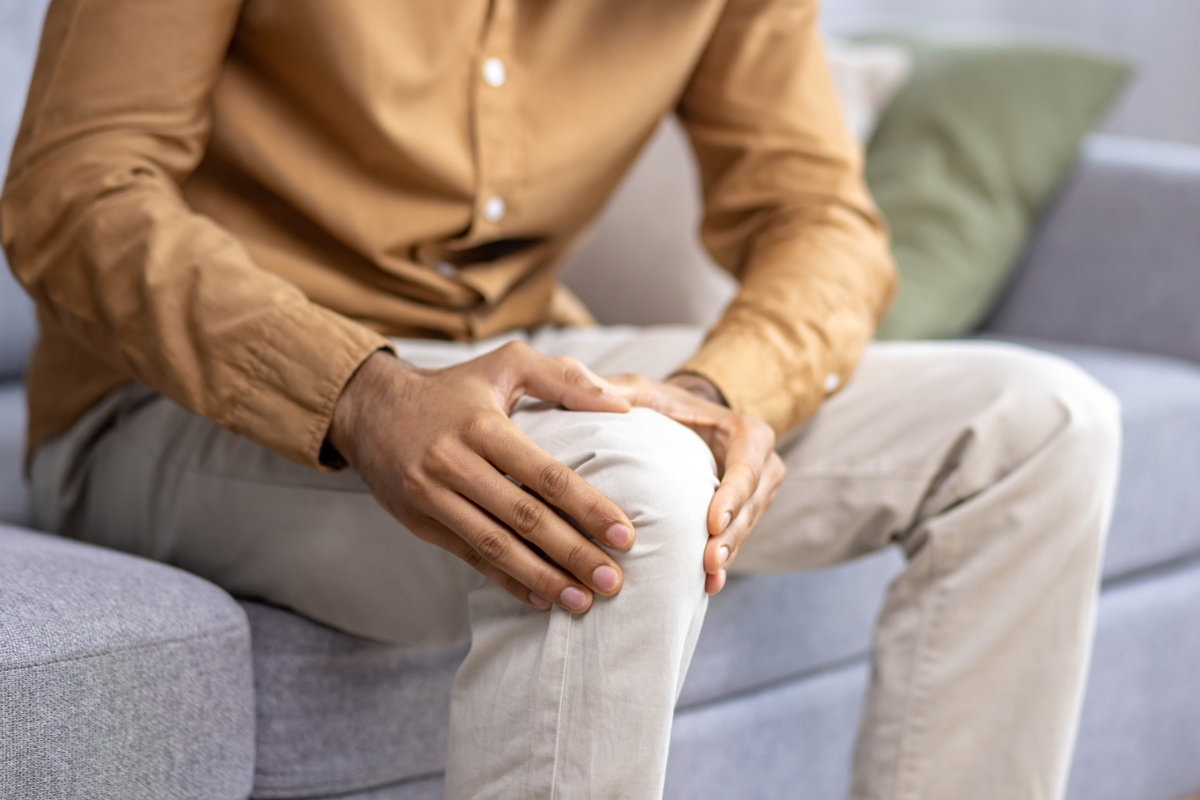
Many people do not realise how important the hips are until walking starts feeling uncomfortable, stiff, or restricted.
At first, it may only feel like tightness after sitting for a while or discomfort during longer walks. Over time, however, people often begin noticing that simple movements no longer feel as easy or natural as they once did. Getting out of the car may feel stiff, stairs become more uncomfortable, or walking for longer distances starts requiring more effort than it used to.
Because the hips are involved in almost every lower body movement, even mild restrictions in this area can begin affecting day-to-day mobility surprisingly quickly.
The Hips Play A Major Role In Everyday Movement
The hips are one of the body’s main weight-bearing joints. They help transfer force between the upper and lower body and are involved in almost every movement we perform throughout the day.
Walking, standing, bending, climbing stairs, exercising, and maintaining balance all rely heavily on how well the hips are able to move and function.
Unlike smaller joints, the hips also work closely with the pelvis, lower back, knees, and surrounding muscles. When movement becomes restricted in one area, the body often begins compensating elsewhere in order to keep moving.
This is one reason hip discomfort can sometimes lead to tension or stiffness in other parts of the body too.
Why Hip Pain Often Leads To Stiffness
One of the most common things people notice with hip discomfort is stiffness, particularly after periods of inactivity.
Modern lifestyles encourage long hours of sitting, driving, and reduced movement variety throughout the day. Over time, this can contribute to tightness through the hips and surrounding muscles, particularly when the body spends prolonged periods in the same position.
Many people notice:
- stiffness getting up from chairs
- discomfort after driving
- reduced flexibility
- tightness when walking after sitting
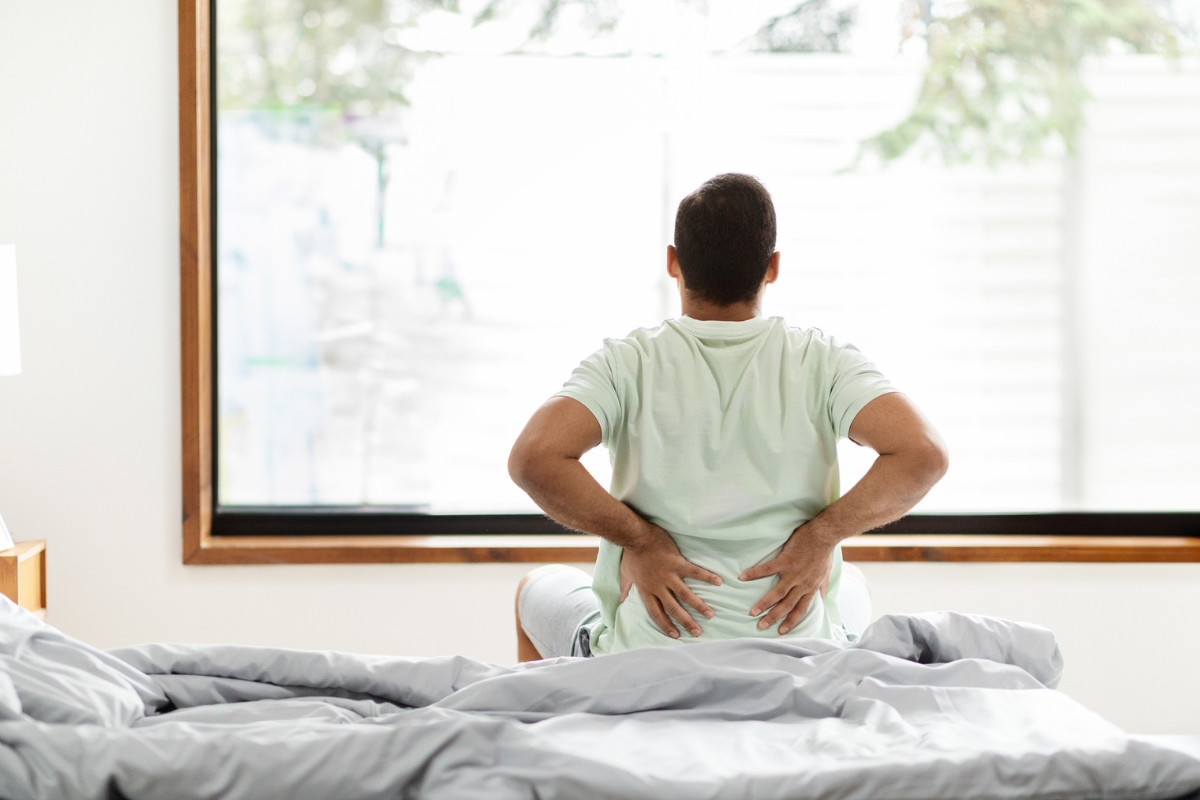
- hips feeling “locked up” in the mornings
Often, symptoms improve slightly once movement begins again, which is why many people initially dismiss the issue as “just stiffness.”
As we explored in our article on Walking for Stress Relief, regular movement plays an important role in how the body feels overall. The body generally responds best to movement variety rather than remaining still for prolonged periods.
Why Walking Starts To Feel Different
When the hips become stiff or uncomfortable, the body naturally begins adjusting movement patterns to reduce strain.
This often happens gradually and unconsciously. People may shorten their stride slightly, shift weight unevenly, or begin favouring one side without fully realising it. Over time, these changes can place extra stress through the knees, lower back, and surrounding muscles.
Some people describe this as:
- walking feeling uneven
- hips tightening during longer walks
- discomfort when climbing stairs
- reduced confidence in movement
- limping slightly after activity
The longer these compensation patterns continue, the more the body may begin adapting around the restriction.
Hip Pain Is Not Always Just About The Hip
Although pain may be felt around the hip itself, the surrounding areas often play an important role too.
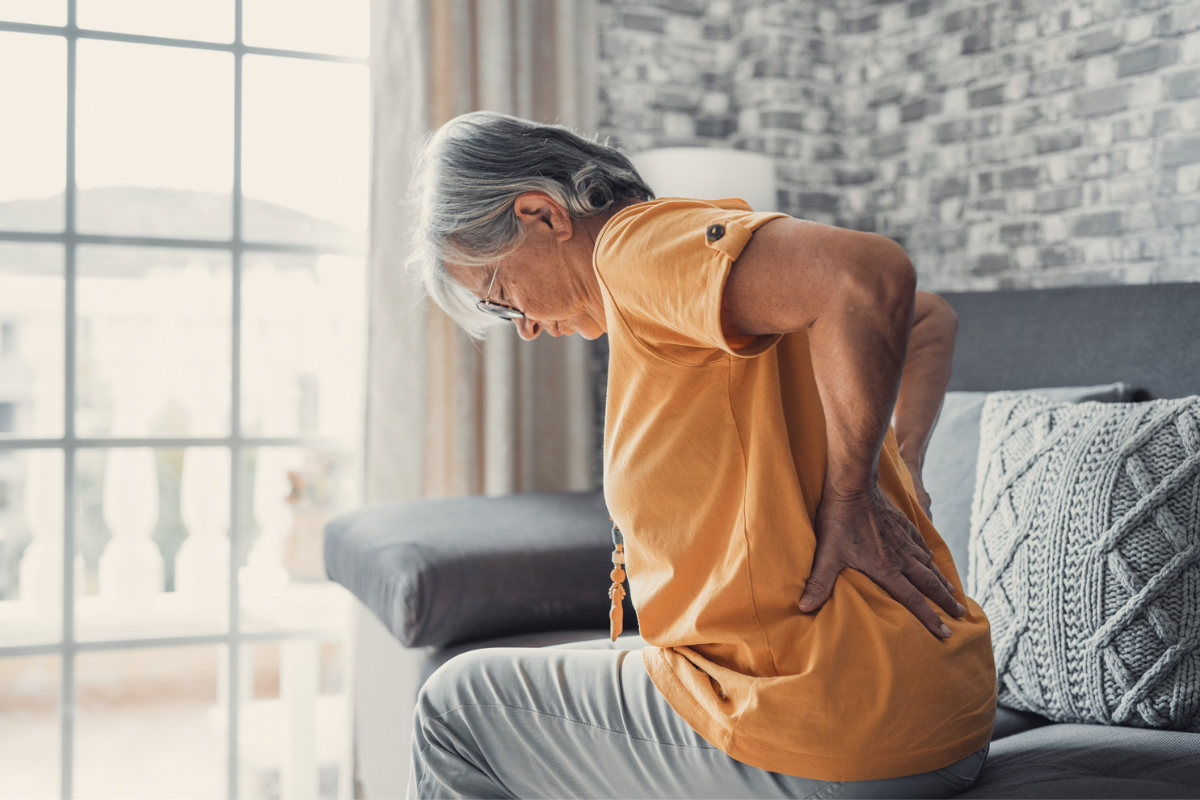
The hips work closely with the lower back, pelvis, glutes, and upper legs. Reduced mobility through the spine or pelvis can sometimes increase strain through the hips during walking and everyday movement. Similarly, muscular tension around the lower back or gluteal muscles may also contribute to how the area feels and functions.
This is one reason proper assessment matters. Looking only at the painful area without considering how the body moves overall may miss part of the bigger picture.
The Impact Of Sitting Too Much
One of the biggest contributors to hip stiffness today is prolonged sitting.
Hours spent at desks, commuting, or relaxing in seated positions often keep the hips in a flexed position for much of the day. Over time, this may contribute to muscular tightness, reduced mobility, and stiffness during walking or standing.
Many people also notice that the less they move, the stiffer the hips tend to feel.
In our article Walking for Stress Relief, we discussed how regular movement can positively influence both physical and mental wellbeing. However, when hip pain starts making walking uncomfortable or restrictive, it can become much harder to stay active and move comfortably throughout the day.
Signs It May Be Time To Get Your Hips Assessed
Occasional stiffness after exercise or activity is common. However, some signs suggest it may be worth getting things properly assessed.
These include:
- pain when walking
- stiffness after sitting
- reduced mobility
- discomfort climbing stairs
- recurring tightness
- pain getting in or out of cars
- limping or favouring one side
- ongoing lower back tension alongside hip discomfort
Many people wait until movement becomes heavily restricted before seeking help, but addressing movement limitations earlier may help prevent further strain building elsewhere.
A Chiropractic Perspective
From a chiropractic perspective, hip pain is often assessed alongside overall movement patterns throughout the body.
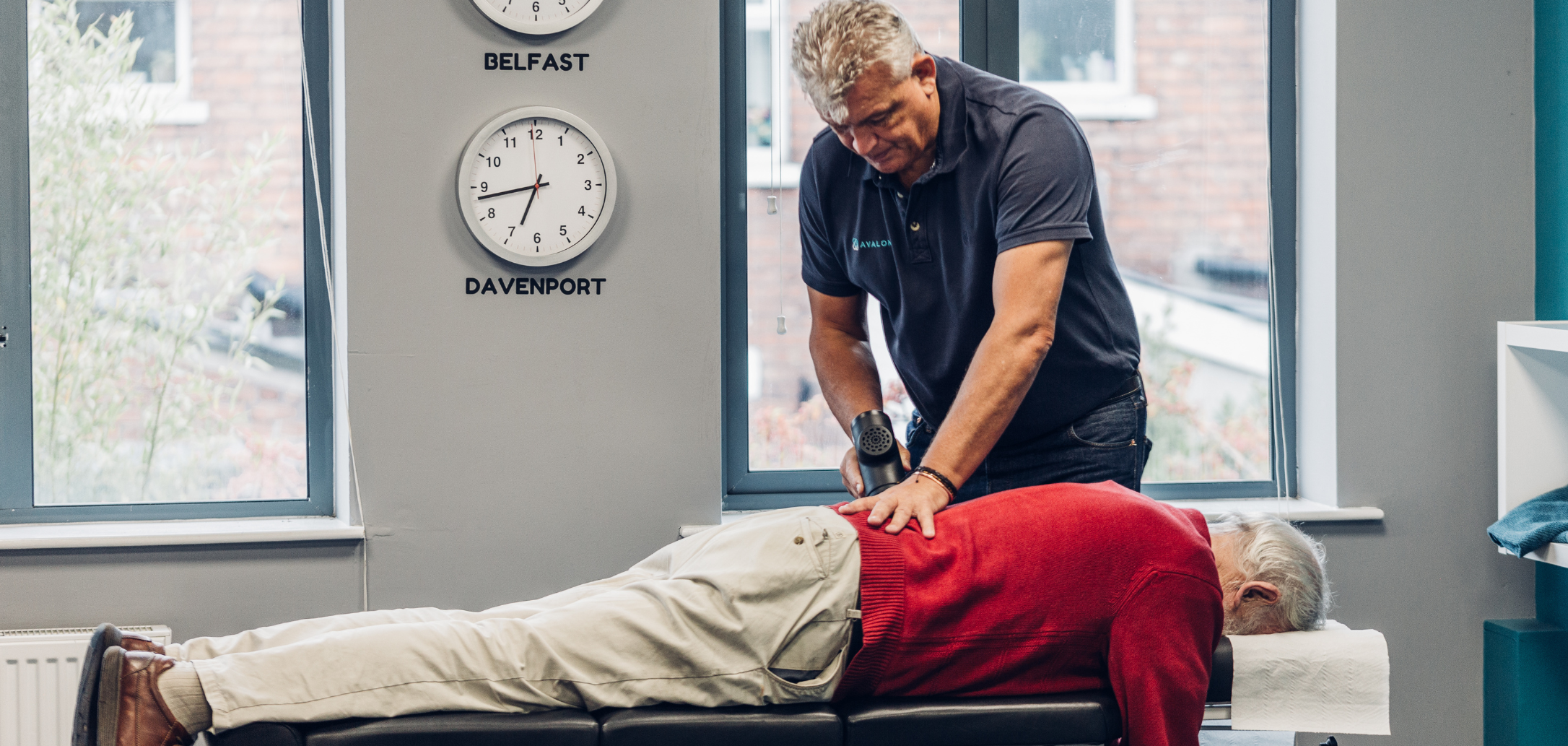
At Avalon Chiropractic Belfast, we assess posture, spinal mobility, pelvic movement, gait patterns, and surrounding muscular tension to help identify factors that may be contributing to ongoing hip discomfort or restricted movement.
An initial consultation may include:
- postural assessment
- spinal scans
- mobility testing
- gait assessment
- examination of hip and pelvic movement
The goal is not simply to focus on where pain is felt, but to understand how the body is functioning and moving overall.
Improving mobility and reducing tension through the hips, pelvis, and surrounding areas may help the body move more comfortably and naturally again over time.
If you would like to learn more about hip pain and how chiropractic care may help support mobility and function, click here to visit our dedicated hip pain page.
Movement Should Feel Comfortable
Many people gradually adapt to hip stiffness without fully noticing how much their movement patterns have changed.
Walking becomes slightly shorter. Stairs become slower. Getting up after sitting takes more effort. Over time, these small changes can begin affecting overall mobility and confidence in movement.
The body often compensates remarkably well for restriction and stiffness, but that does not mean those limitations should simply be ignored.
Improving mobility, movement patterns, and overall function early may help reduce ongoing strain and support more comfortable movement in everyday life.
To make an appointment with us here in Avalon Chiropractic, click here to book in online.